Boutinot
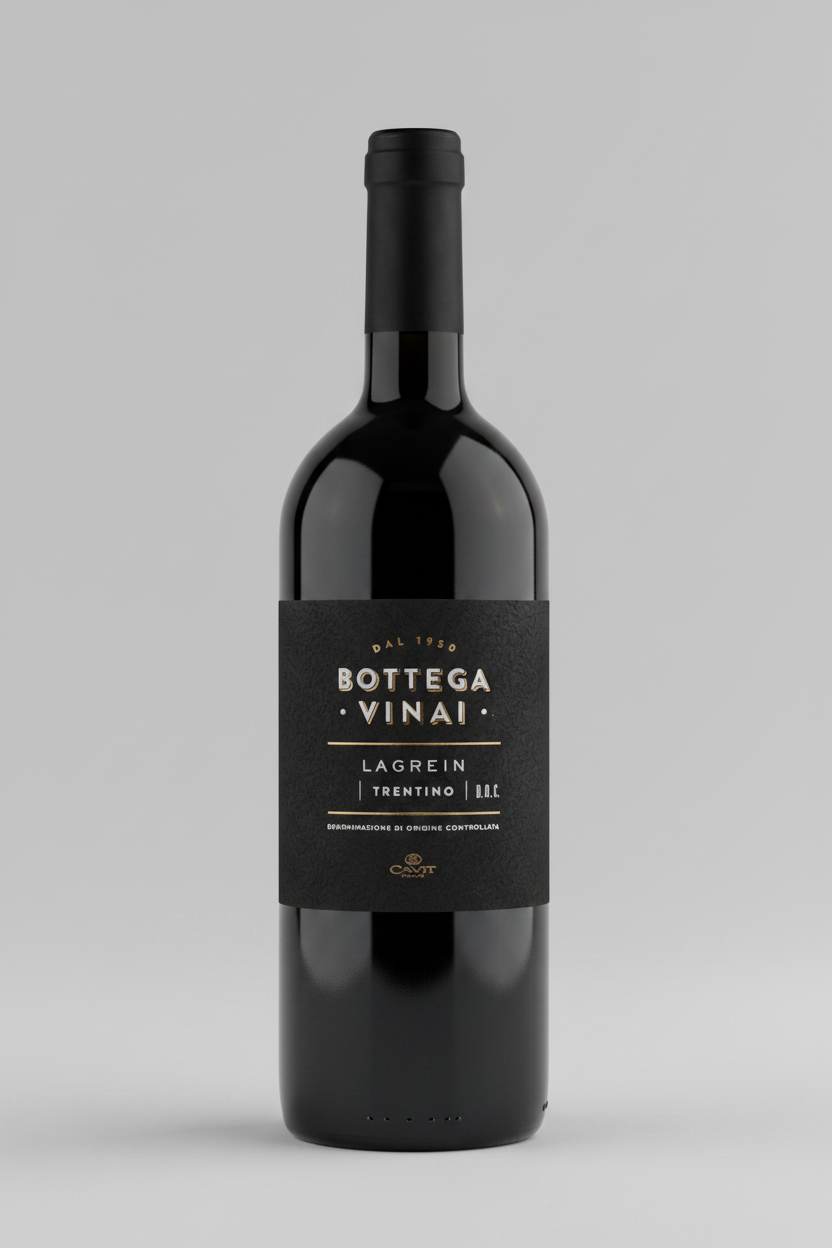
Bottega Vinai Lagrein, Trentino DOC 2022
Bottega Vinai Lagrein, Trentino DOC 2022
Couldn't load pickup availability
The Lagrein grape is indigenous to Trentino and thought to be related to Syrah. It makes great food wine, combining vibrant bitter cherry and plum fruit with darker, spicier notes. The 2019 vintage Bottega Vinai was awarded 3 'Harpers Wine Stars' in 2022, including the overall 'Star of Italy'!
Production
Produced from fruit grown in the Valle del Sarca, on loose stony-limestone soils which benefit from the warm wind coming from Lake Garda. Lagrein prefers warm, sheltered areas and produces wine of noteworthy concentration and complexity. Traditionally vinified at 28-29 degrees C with long maceration on the skins in small stainless steel tanks. It is then moved to barriques for 12-14 months and subsequently matured in large oak casks for a further 6 months.
Tasting notes
A warm spicy nose with lightly smoky aromas, which mingle with plum, red berries and a hint of chocolate. The palate is finely structured with supple tannins and bright balancing acidity. Ripe plum and blackberry fruit lead to long, savoury finish with a typically Italian bitter cherry twist.
Food match
Delicious served with grilled red meat, stews or pasta with a concentrated meat or tomato sauce.
Awards
2020 Vintage

Decanter World Wine Awards 2023
Bronze
International Wine and Spirit Competition 2023
Bronze
International Wine Challenge 2023
Silver
2019 Vintage

Decanter World Wine Awards 2022
Silver
-
ABV
13%
-
Case/Bottle Size
6 x 75cl
-
Region/Country
Trentino, Italy
-
Grape
Lagrein 100%
-
Features
Sustainable
-
Closure
Cork
-
Winemaker
Anselmo Martini
-
Appellation
Trentino DOC
-
Allergen info
Contains sulphites and no other allergens

Meet the Producer
Cavit is a leading co-operative in the mountainous Trentino region of northeast Italy. The winery began as a consortium of associated grape growers in 1950, with a dedicated winery at Ravina di Trento built in 1964. Today it unites 11 separate cellars and their combined 5,250 grape growers across 6,350 hectares of vineyard, to produce an impressively broad portfolio from an intriguing palette of indigenous and international grape varieties. Trentino has a much higher proportion of wines produced as DOC than any other region in Italy - an average of 80% of the region's wines have a DOC classification, compared to around 30% elsewhere in the country. Remarkably, Cavit accounts for 60% of this region's wine production and they advise and supervise all aspects of this production from the vineyard to the bottle. Their site at Maso Toresella on the shores of Lake Toblino was the historic residence of the Prince Bishops of Trento, surrounded by 6.5 hectares of vineyard. It is one of the most significant 'masi' (rural estates) in the whole of Trentino. They have worked with the San Michele all’Adige Oenological Institute, since 1988, to develop wines of the highest quality. In 1993 Cantina Altemasi was established, also at Ravina, not far from the region's capital of Trento - for the production and maturation of Classic Trentodoc and Charmat Method sparkling wines. Trento Doc was the first Classical Method sparkling wine DOC to be established anywhere in the world after Champagne, and the first in Italy.
A Note on Sustainability
For more than two decades Cavit has adhered to the “Protocol for the Production of High-Quality Wines in Trentino”, marking its commitment to fully sustainable agriculture. It is also a member of SEDEX and has achieved SNQPI (Sistema di Qualità Nazionale Produzione Integrata) certification, applicable to its IGT Dolomiti and Trentino DOC wines. In addition to using only green energy, Cavit has made major investments aimed at reducing energy consumption. Specifically, it has built three photovoltaic generators which produce part of its energy requirements from renewable sources (more than 800 Megawatts per year), significantly reducing carbon dioxide emissions. Their remaining energy needs come from 100% guaranteed renewable sources. Cavit are also certified with ISO 14001:2015, the internationally recognised standard for Environmental Management Systems. From 2026 they're moving some key volume ranges (including Lunetta and Terrazze della Luna) into lighter-weight bottles.
PICA (Integrated Agricultural and Wine-producing Cartographic Platform), is the result of a five year research project conducted by Cavit in collaboration with MPA Solutions and leading research centres in Trentino: the Edmund Mach Foundation (FEM) and the Bruno Kessler Foundation (FBK).
The PICA platform is a complex system, but it works in a simple way. By networking the 4,500 vine growers of the 11 Cavit wine producers’ co-operatives it collects information and gives advice. The main purpose of this platform is to help the grower to achieve total sustainability. The project comprises of two main areas.
The first defines the choice of the most suitable grape varieties, on the basis of the technical and environmental parameters of the soil; the second involves the creation of an avant-garde system with which agronomists and winemakers can receive specific information concerning each vineyard and the various phases in the cultivation of the vines. In practice, waste is eliminated and the grower has total control. For example, it is possible to regulate the water supply according to the characteristics of the soil and the weather conditions.