Wenlock Cellars
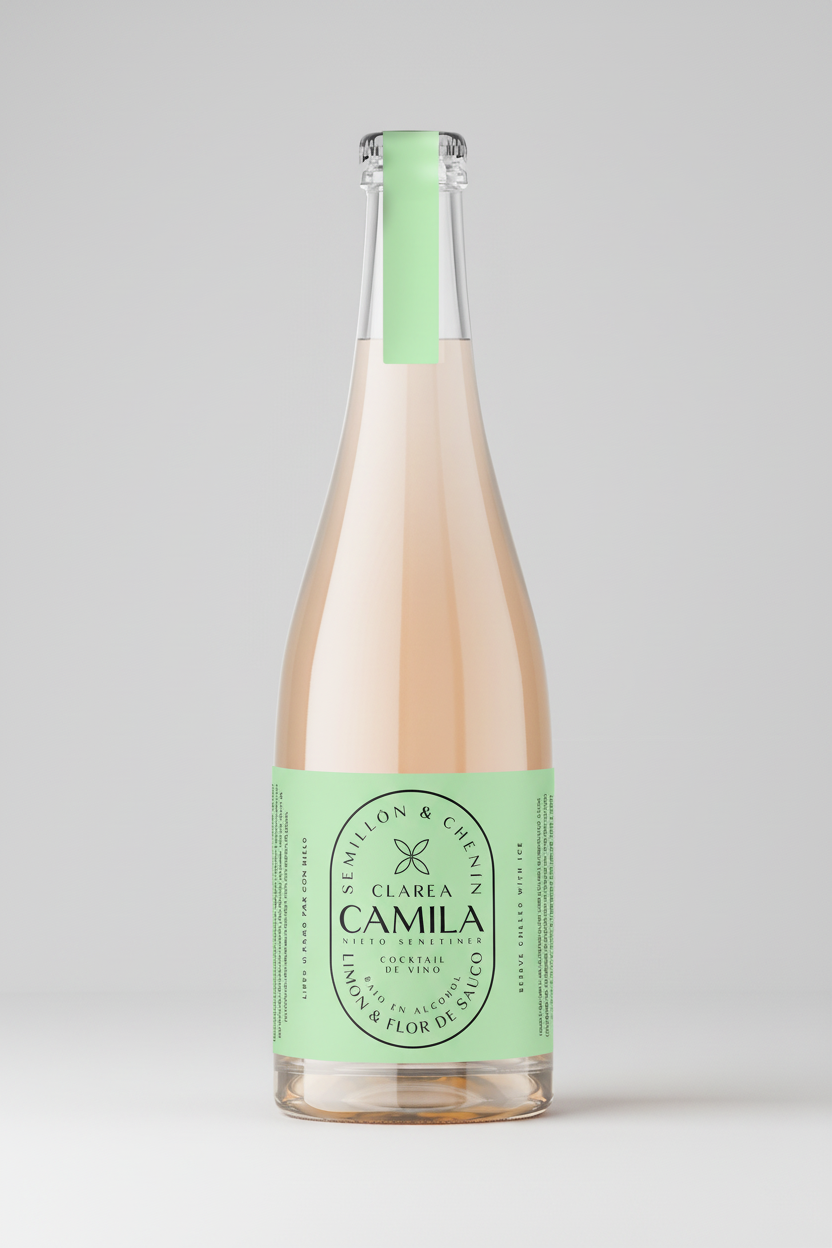
Nieto Senetiner Camila Clarea Aperitivo Semillon & Chenin Blanc, Mendoza NV
Nieto Senetiner Camila Clarea Aperitivo Semillon & Chenin Blanc, Mendoza NV
Couldn't load pickup availability
A wine cocktail made with Mendoza grapes and infused with natural botanicals, and a touch of fine bubbles. This low alcohol spritz is a vibrant blend of Semillon & Chenin, serve chilled over ice and a slice.
Production
This field blend of Semillon and Chenin is sweetened with white must and a dosage of natural flavouring. Slightly sparkling. Perfect serve - chilled with a slice of lemon. It can also be combined with fresh mint leaves to enhance floral scents.
Tasting notes
Lemon, elderflower, vanilla and ginger.
-
ABV
7%
-
Bottle Size
75cl
-
Region/Country
Mendoza, Argentina
-
Grape
Chenin Blanc 50%, Semillon 50%
-
Features
Vegetarian, Vegan, Sustainable, Sparkling
-
Closure
Crown Cap
-
Winemaker
Roberto Gonzalez
-
Appellation
Mendoza
-
Allergen info
Contains sulphites and no other allergens

Meet the Producer
Nieto Senetiner has grown to become one of the leading stars of Mendoza. Although the vineyards and winery were founded by Italian immigrants and date back to 1888, they were acquired by the Nieto and Senetiner families in 1969.
Nieto has some 400 hectares of vineyards in virtually all of the best sub-districts of Mendoza from which it produces classic and modern wines characterised by the uniquely appealing balance of power and finesse that defines the best wines of the region. The top wines come from very old vineyards in the famed sub-district of Agrelo, and are fully deserving of their status.
Since joining the estate, winemaker Santiago Mayorga has taken the wines to another level and was named 'Young Winemaker of the Year 2017' by Tim Atkin.
A Note on Sustainability
Nieto Senetiner have a deep commitment to regenerating the soil, reducing the use of pesticides and strengthening the communities at their facilities and vineyards. Their Don Nicanor brand is moving to Organic production and they have been audited and passed the Argentine Winery Sustainability Protocol with Villa Blanca, Vistalba Estate and Las Torcazas Estate now certified. The grapes grown here are used for the Nieto Senetiner Malbec DOC and Don Nicanor wines. They will continue this process and go on to certify 100% of their estates and wineries.
This protocol has been collaboratively developed and adapted for Argentinian winemaking from the California Code of Sustainable Winegrowing Workbook. This provides educational and awareness tools to increase the application of sustainable practices in vineyards and wineries and consists of a self-evaluation of their vineyards – soils, canopy management, irrigation, study of climatic variables, etc. – to determine practices that can be improved upon. Water consumption (in cubic metres consumed per month) is also tracked and recorded in the winery's sustainability report. For Nieto Senetiner, sustainability isn’t just an environmental concept though, it’s sustained on four fundamental pillars: ethics and business transparency, economic development, the health and wellbeing of the community, and community development.
To fight vineyard pests and diseases Nieto Senetiner uses environmentally-friendly treatments, several of which are permitted in organic agriculture. It is registered in the ISCAMEN Agro-Clean Programme in which empty plastic agrochemical containers, previously washed and destroyed, are safely recycled. They have implemented practices such as vegetable coverage to conserve the microbiota and microfauna of the soil. The use of drip irrigation systems to preserve water is a key means of managing a scarce resource, especially in Mendoza.
For grapes supplied by contracted growers, each year Nieto Senetiner provides a manual of good agricultural practices listing the preferred agrochemicals to use to treat each pest and disease. This includes the time that these compounds take to break down so that grapes arrive at the winery without any chemical residue. Growers are also given sustainability guidelines to which they should adhere, and they are requested to document and record any treatments made during the growing season.
Bottle weights have been reduced to help lower the carbon footprint of the wine.