Boutinot
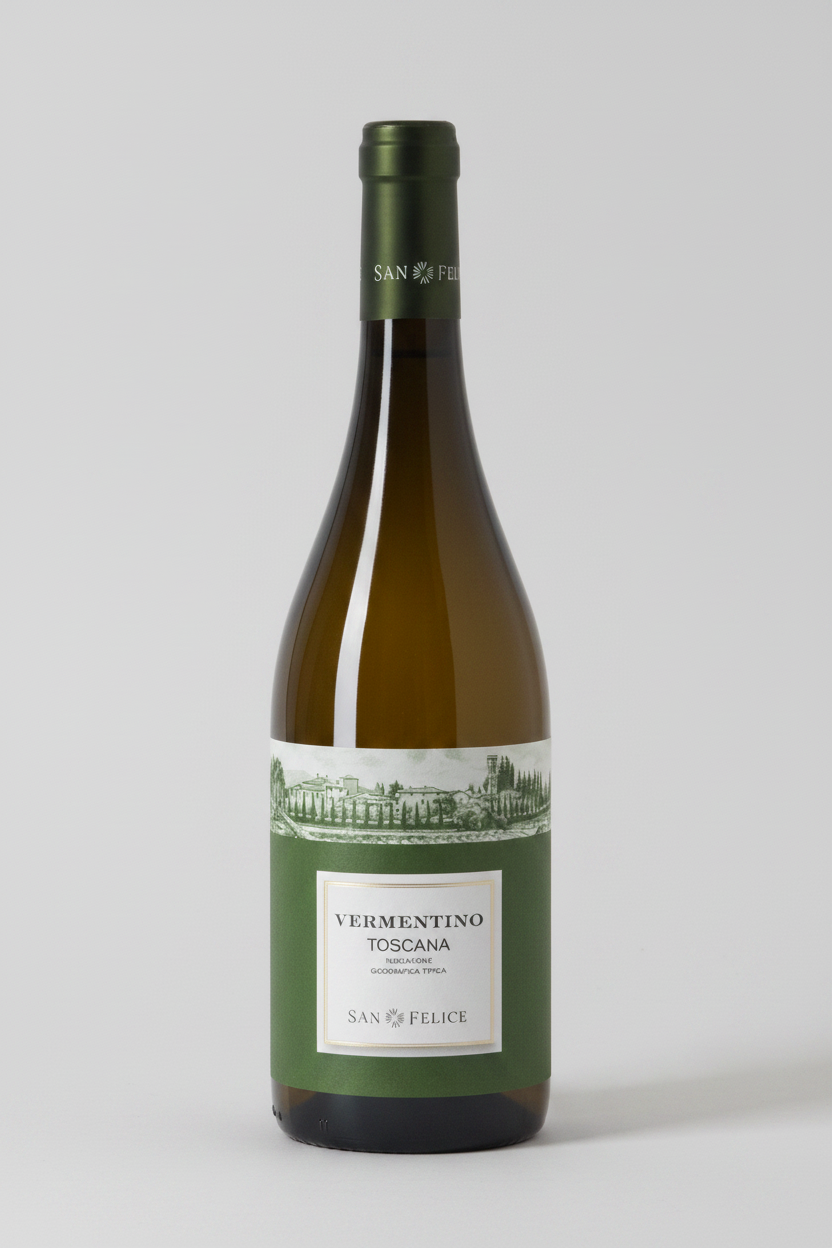
San Felice Vermentino, Toscana IGT
San Felice Vermentino, Toscana IGT
Couldn't load pickup availability
Production
Vermentino is a classic variety in the Maremma region, where it achieves perfect ripeness in the hill. Located on the Tuscan coast, the Mediterranean moderates the temperatures, particularly in autumn. Vermentino from the Perolla estate is blended with a little Sauvignon Blanc from San Felice's Camporosso vineyard. The wine is cool-fermented, and then matured sur lie for about 1 month.
Tasting notes
A concentrated white with bright lemon and stone fruit characters, balanced by a touch of freshness from the Sauvignon Blanc. The palate has good weight and an almost creamy texture, with ripe apricot, lemon peel and tropical notes. This is balanced by crisp citrus acidity, lightly floral characters and a pleasing minerality.
Food match
Ideal as an aperitif, but enjoy this very versatile wine with light starters, fish, veal or poultry.
-
ABV
13%
-
Case/Bottle Size
6 x 75cl
-
Region/Country
Toscana, Italy
-
Grape
Vermentino 85%, Sauvignon Blanc 15%
-
Features
Vegetarian, Sustainable
-
Closure
Cork
-
Winemaker
Leonardo Bellaccini
-
Appellation
Toscana IGT
-
Allergen info
Contains sulphites and milk

Meet the Producer
An outstanding Tuscan winery that has pioneered key developments in the Chianti Classico region for the last 40 years.
Based in Castelnuovo Berardenga, around 30 miles south-east of Florence and at the southern end of the Chianti Classico zone, this reputable estate includes 140 hectares of vineyard, a cellar, around 17,000 olive trees, and a village with a prestigious hotel complex. Winemaker Leonardo Bellaccini crafts a portfolio of wines which is highly regarded and multi award-winning - classic expressions of high quality Sangiovese.
This is a pioneering winery - producing the fore-runner to the Supertuscans, Vigorello (the first wine in the Chianti Classico region produced using solely red grapes) in the late 1960s. This was followed by the introduction of Poggio Rosso in the 1970s (the first example of a Chianti Classico 'Cru'), and then by its partnership with the Universities of Florence and Pisa in the 1980s. At a time when other estates were focusing on international varieties, this partnership led to the development of its Vitiarium, or experimental vineyard, where it has cultivated and studied indigenous grape varieties (such as Pugnitello) for over 30 years. San Felice was also amongst the first Chianti Classico estates to produce a 'Gran Selezione' wine - a new classification introduced as the top quality tier for wines in the region - with the inaugural 2010 vintage.
San Felice lies adjacent to its sister property, Villa la Pagliaia - and has an additional estate, Campogiovanni, in Montalcino.
A Note on Sustainability
In 2022, San Felice obtained an Equalitas ‘Sustainable Organisation’ accreditation for their vineyards, winery/cellar and bottling facility. This is an Italian scheme that promotes sustainability across the wine supply chain, creating a globally recognised sustainable quality model that is based on three fundamental pillars: environmental, social and economic.
As part of this, San Felice undertake various initiatives, which include terracing and the constant analysis of the flora and microfauna in the vineyards which help preserve the soil by limiting its erosion; sustainable management of the vineyards thanks to “precision viticulture” allowing ad hoc treatments and pruning for each plant, leading to a lower environmental impact and a higher quality of the product; the construction of a new purification plant serving the cellar and all other buildings on the site which has allowed sustainable water management, through a very sophisticated and automated purification process; and the investment in photovoltaics which has allowed them to generate 100% of their electricity requirements.
San Felice have always paid great attention to the biodiversity of grape varieties: with the experimentation started in the Vitiarium, hundreds of varieties have been planted and studied for over thirty years, to avoid the loss of their genetic heritage and for the precious contribution they can give to the diversity of our vineyards.